Why Standard Yoga Mats Are Too Short - and What to Do About It
Quick Answer: The standard yoga mat is 173cm (68 inches) long, which was sized around an average height that has not been average for decades. If you are taller than about 173cm you will run out of mat in downward dog, in savasana, and in any lunge with a long stride. The fixes, in order: buy a long mat at 183cm (72in) or an XL at 200cm (78in), angle yourself diagonally as an interim measure, place a towel at the head end for savasana, and in class take a spot where overhang does not put you into someone else’s space.
This is not a flexibility issue or a form issue, and it is worth naming, because a lot of tall women spend years quietly assuming they are doing the pose wrong.
How much mat do you actually need?
More than your height, which is the part that catches people out.
The rough rule: your mat should be your height plus 10-15cm. Not equal to your height. You need a margin at both ends for hands and feet to land on grip rather than on floor.
Standard mats are 173cm. That is the industry default and it has barely moved in thirty years. Long mats are typically 183cm and XL mats run 200cm or more.
The numbers, plainly: at 170cm you are fine on a standard mat with a few centimetres spare. At 175cm you are already overhanging in some poses. At 180cm a standard mat is genuinely too short - your hands in downward dog land on floor and your head or feet come off the end in savasana. At 185cm and above, an XL mat is not a luxury.
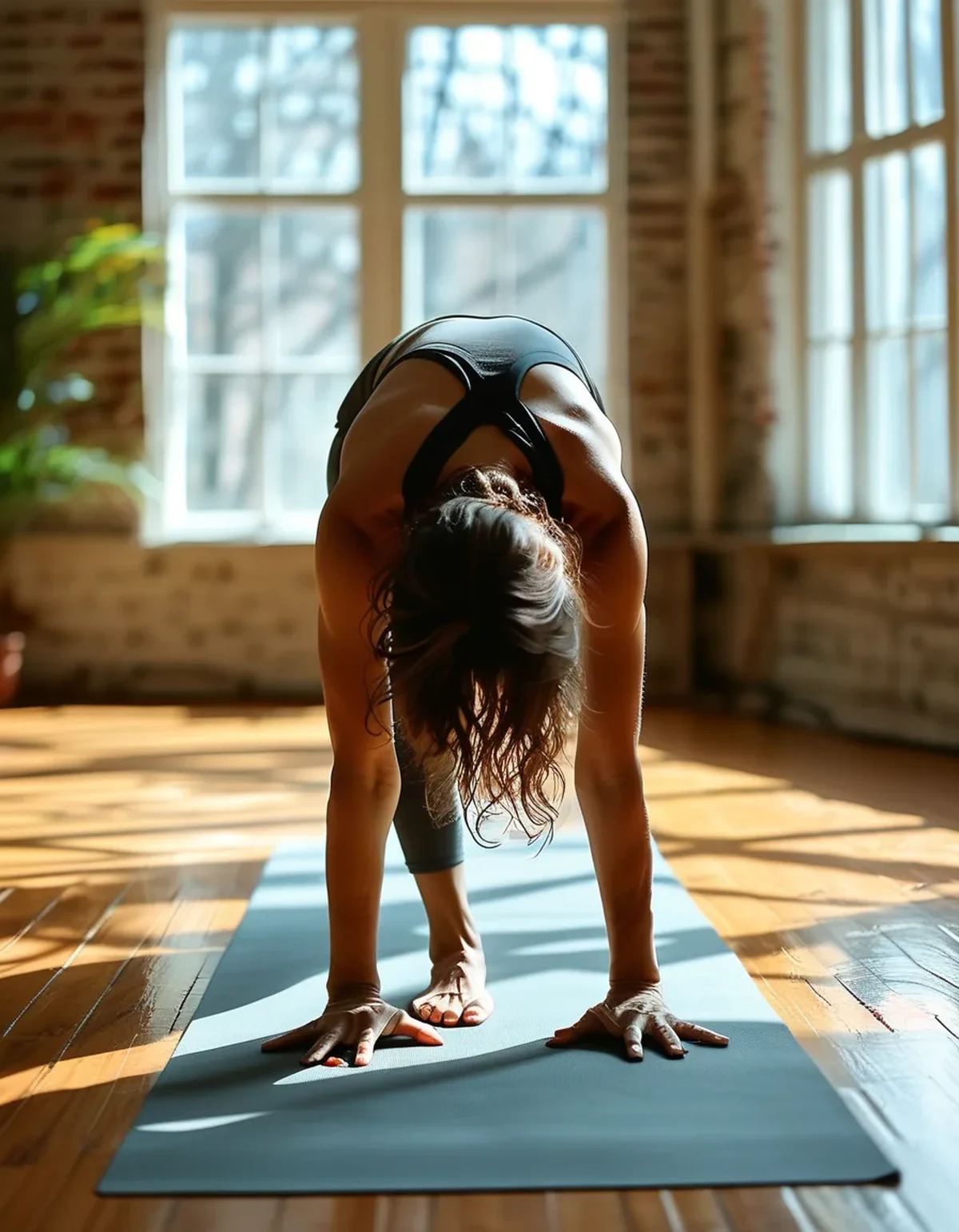
Downward dog is where it shows first, because in a well-proportioned dog your hands and feet are close to your full height apart. If your hands are on hardwood while your feet are on rubber, you have unequal grip in a pose that specifically requires equal grip - and the resulting slide is a mat problem, not a technique problem.
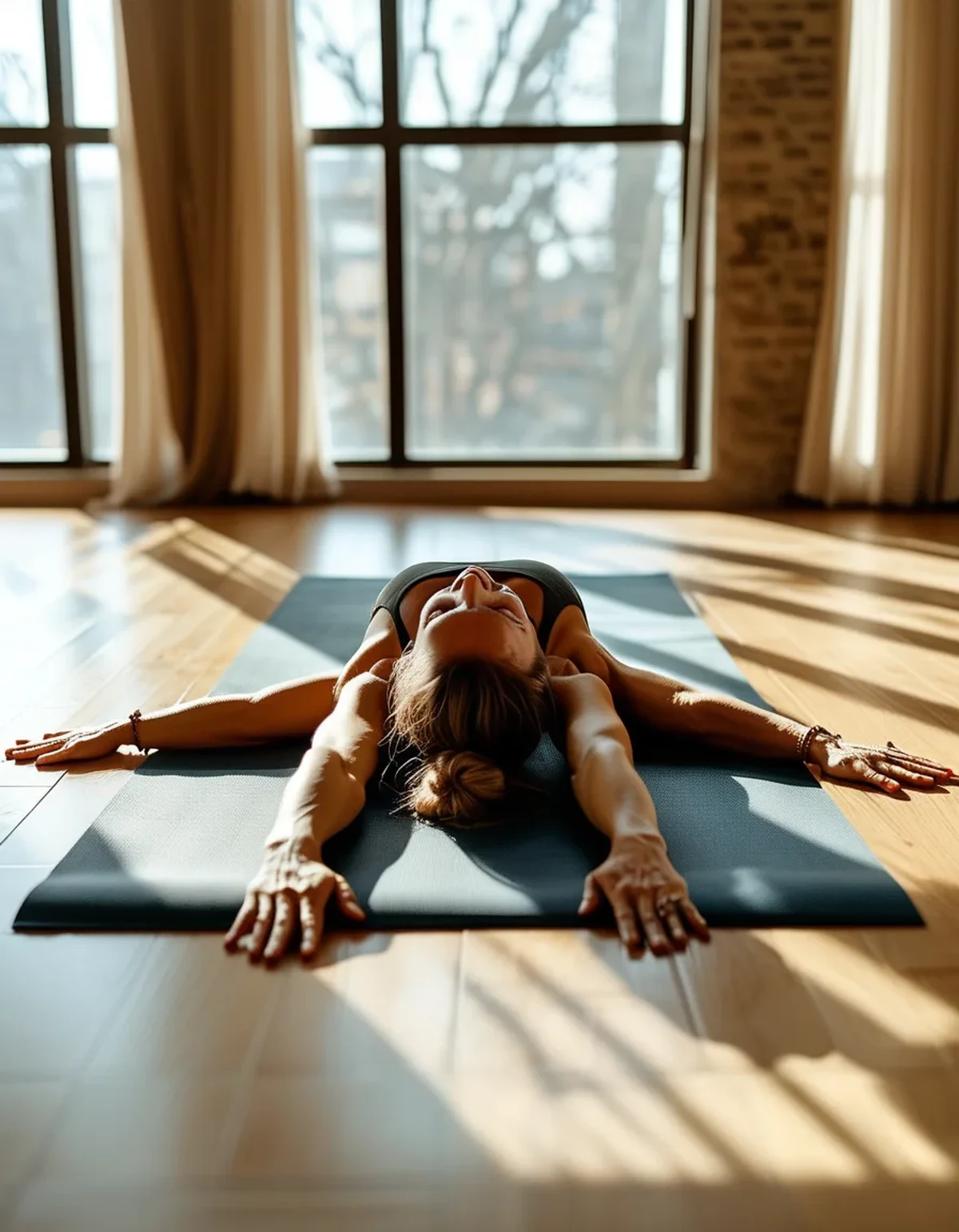
Savasana is where it shows most annoyingly. Ending a good practice with your heels on a cold studio floor is a small thing that undermines the entire point of the pose.
What actually goes wrong when the mat is too short?
Four specific problems, all of which look like technique failures from the outside.
Sliding in downward dog. With hands on floor and feet on grip, only one end holds. The hands slide forward, the pose collapses, and the usual response is to grip harder with the fingers and shorten the pose - which teaches you a worse dog than the one you are capable of.
Shortened stride in lunges and warrior poses. If you unconsciously shorten your stance to stay on the mat, you are training a stance that is too narrow for your leg length. Warrior II with a proportionally short stance loads the front knee in a way it should not be loaded, and it is a genuinely common source of knee complaints in tall practitioners.
Cold and hard contact in floor poses. Head, heels, or forearms on a bare studio floor during long holds. Uncomfortable, distracting, and in a cool studio in autumn, actively unpleasant.
Constant repositioning. The tell is shuffling backward between poses to reclaim mat. That shuffling is what breaks flow and attention - and again, it reads as restlessness rather than as an equipment problem.
Why nobody mentions it: most teachers are not tall, and the studio mats are standard, so it never comes up. Tall women very often assume the problem is their proportions rather than the equipment.
What are the actual options?
Four, in order of how well they work.
1. Buy a long or XL mat. The complete fix. 183cm suits most women up to about 178cm; 200cm covers everyone else. The trade-off is weight and bulk - a 200cm mat in a normal thickness is noticeably heavier to carry, and it will not fit a standard mat bag. Budget for a longer bag or a strap.
2. Go diagonal. Free, immediate, and genuinely effective as a stopgap. Placing yourself corner to corner on a standard mat gives you the diagonal length - roughly 185cm across a standard mat - which buys about 12cm. In a full class this is often impossible without encroaching on neighbours, but in a home practice it works well.
3. Add a towel or a second mat at the head end. Solves savasana and any floor pose, does nothing for downward dog. Cheap and worth doing regardless.
4. Choose your spot in class deliberately. Back row or an end position means your overhang goes into open floor rather than into somebody’s mat. Arriving five minutes early to claim an edge spot solves more of this than any amount of technique adjustment.
On thickness while you are choosing: taller usually means heavier through the joints, and a 5-6mm mat protects knees and wrists better than the standard 4mm. A thinner mat gives better stability in balance poses, so if you can justify two mats, thin for flow classes and thick for floor-heavy ones is the split that makes sense.
Myth vs Fact: Tall Women and Yoga
Myth: Tall people are naturally worse at yoga. Fact: Longer levers make some balances harder to control and make others easier. What tall practitioners mostly lack is correctly sized equipment, not capability. Give the same person a properly long mat and blocks at the right height and most of the apparent difficulty disappears.
Myth: If you cannot reach your toes it is tight hamstrings. Fact: Sometimes. But a longer torso relative to arm length changes the geometry of every forward fold. Two people with identical hamstring flexibility can end up at visibly different depths purely because of proportion. Compare yourself to yourself over time, not to the person beside you.
Myth: Blocks are for beginners. Fact: Blocks correct for proportion, and tall practitioners need them more, not less. The distance from your hand to the floor is greater in every standing pose. Using a block in triangle is not scaling down, it is scaling correctly.
Myth: An XL mat is unnecessary if you only practise at home. Fact: Home is where you have the most control and least excuse. If anything the home mat is the one that should be right.
Myth: Studio mats are fine to borrow. Fact: Studio mats are always standard length, and usually thin and worn. If you are tall, the borrowed mat is the worst version of the problem.
What else in a studio is sized wrong for you?
The mat is the obvious one. These are the rest.
Blocks. Standard blocks are 23 x 15 x 10cm and give you three heights. Tall practitioners frequently need the tallest orientation as the default, and sometimes need two stacked. Bringing your own pair means you never have to negotiate for the last set in a full class.
Bolsters and straps. Standard straps are 180cm, which is short for a tall person doing anything overhead. A 240cm strap is the tall-friendly size, and it costs very little.
Wall space. In any wall-supported pose, ceiling height and the height of wall fixtures start to matter. Worth noticing where the low pipes are before you invert.
The gap between mats in a full class. Standard studio spacing assumes standard reach. In a packed class, a tall person in warrior II will genuinely reach into the neighbouring mat. This is a spot-selection problem, not a manners problem - take the end of a row.
Heat. Larger bodies with more surface area heat up and cool down differently, and in a hot class tall practitioners often struggle more with the temperature than the poses. Hydrate more than the class average and position yourself away from the heaters if you can choose.
FAQ: Mat Length and Tall Practice, Answered
What length mat should I buy at 180cm tall?
A 183cm long mat is the minimum and a 200cm XL is more comfortable. At 180cm, a standard 173cm mat leaves you short at both ends in every long pose.
Are XL mats much heavier to carry?
Yes, noticeably - typically 1-2kg more than a standard mat, and they do not fit standard bags. If you commute to class, consider a lighter travel mat for the studio and a proper XL for home.
Will a longer mat fit in a normal studio space?
Usually yes for length, since studios lay mats in rows with space fore and aft. Width is the constraint in packed classes, and XL mats are often wider too. Arrive early.
Is a wider mat worth it as well as longer?
If your shoulders are broad or your practice includes a lot of wide-legged poses, yes. 66cm wide instead of the standard 61cm makes a real difference in anything with the arms out.
Should I tell my teacher?
Worth mentioning once. A good teacher will adjust cues about mat edges and stance width for you, and will stop giving you alignment corrections that are actually equipment corrections.
TL;DR:
- Standard mats are 173cm, which is too short for anyone over roughly that height. Aim for your height plus 10-15cm.
- 183cm long or 200cm XL are the real fixes; going diagonal buys about 12cm as a stopgap.
- A short mat causes sliding in downward dog and shortened stances - both read as technique problems and are not.
- Blocks and a 240cm strap correct for proportion the same way a long mat does.
- Take an end spot in class so overhang goes into open floor.
Spending years thinking your alignment is wrong when your equipment is 15cm too short is a very common tall-woman experience. Measure the mat before you correct the pose.
Keep Reading
This article is for general informational and styling purposes only. Fit, sizing, and product availability may vary.
